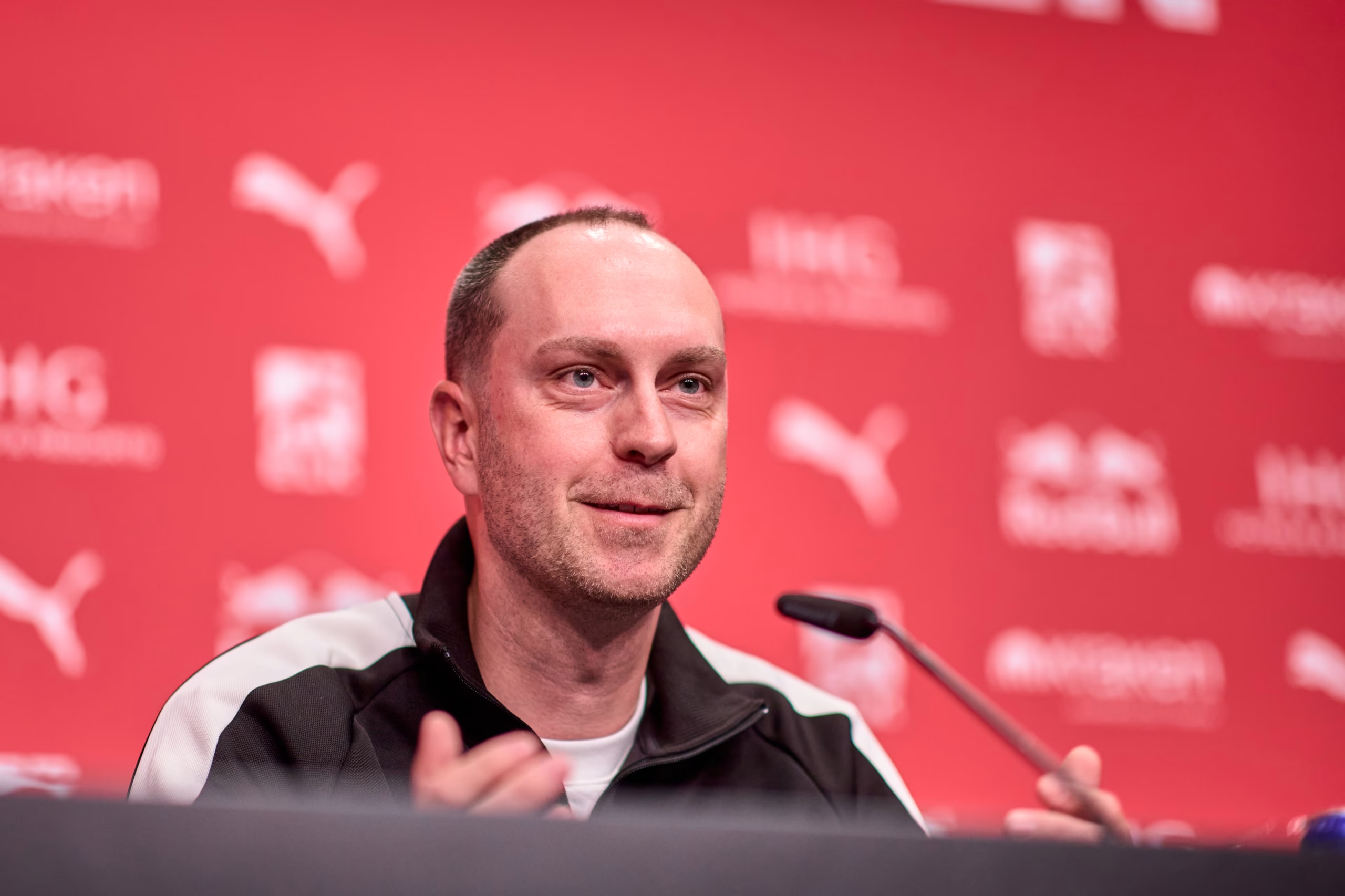
RB Leipzig have reportedly decided to part ways with Ole Werner, a move that has raised eyebrows.
Dismissing a coach who guided the club back into the Champions League with a third-place finish in the Bundesliga appears harsh.
However, Leipzig have never operated like a conventional club, and Werner’s departure shows there is a clash over identity, ambition and style.
Werner arrived last summer from Werder Bremen following Leipzig’s disappointing seventh-place finish and the departure of Marco Rose.
He was known as a tactically flexible manager who overachieved with fewer resources. His task was to stabilise the talented squad and return them to Europe’s elite competition.
In purely results-based terms, he succeeded. However, football at Leipzig is judged by more than league finishes. There is a Red Bull way of playing football.
Hated as they are by most of Germany for being a “manufactured club” and operating with SSV Markranstadt’s license, they have an identity, and there was barely any semblance of it under Werner.
Sporting director Marcel Schafer supported Werner and was satisfied with the progress made under his leadership.
Unfortunately, other influential figures within the Red Bull hierarchy were unconvinced.
Werner’s tenure reportedly became quite controversial internally, with concerns over the team’s style, long-term development and alignment with the club’s overarching vision.
Leipzig have built their reputation on aggressive pressing, dynamic attacking football and relentless player development.
While Werner delivered stability, some decision-makers felt he did not fully embody the energetic, forward-thinking identity the club wants to project. Enter Martin Demichelis.
Why do Leipzig want to hire Martin Demichelis?
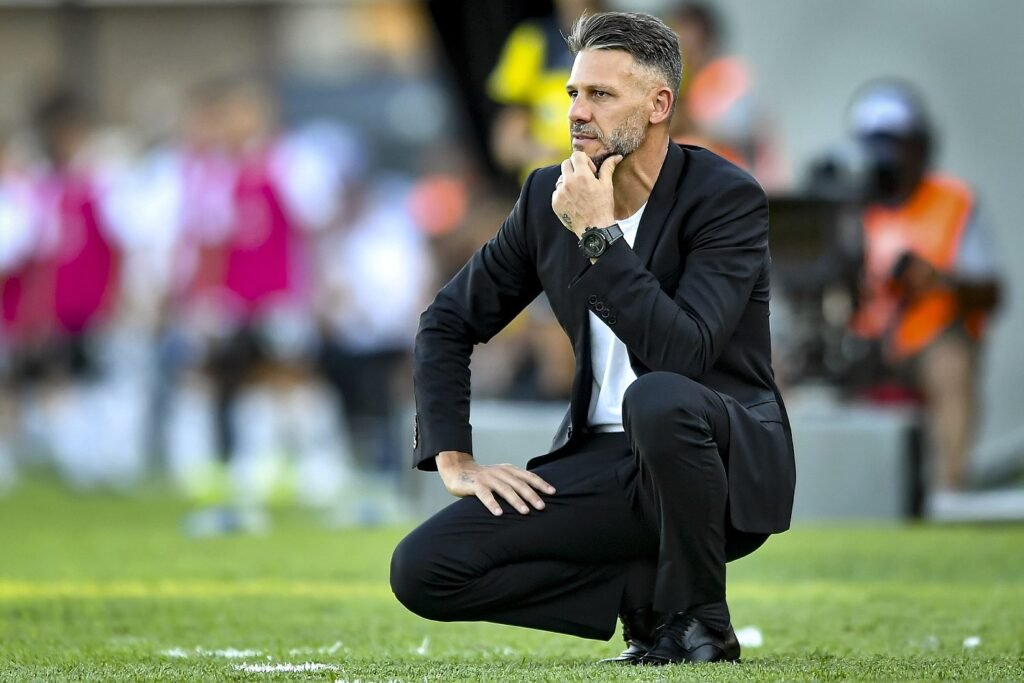
The former Bayern Munich and Manchester City defender is a fascinating appointment and a scary gamble. His managerial career has not been straightforward.
After retiring in Spain, he worked briefly as an assistant before returning to Bayern Munich, where he coached the club’s youth sides and reserve team.
His spell with Bayern’s U-23s was mixed. They were relegated from the 3. Liga after a dramatic collapse.
He bounced back at River Plate. Across 87 matches in charge, Demichelis delivered the 2023 Argentine league title and maintained an impressive points-per-game record of 1.98.
However, expectations at River are enormous, and inconsistent league form eventually saw the fanbase turn against him.
Next, he went to Monterrey, then ended up at RCD Mallorca in search of stability. In those spells, he showed qualities that have attracted Leipzig.
At Mallorca, Demichelis immediately transformed one of La Liga’s most defensive sides after joining in February 2026 following the dismissal of Jagoba Arrasate.
He abandoned the deep, reactive systems and introduced a proactive, possession-based approach centred around a narrow 4-4-2 diamond.
The system prioritised central overloads, aggressive pressing and quick vertical progression through midfield. The change was dramatic.
Mallorca suddenly looked capable of controlling matches rather than surviving them.
A memorable victory over Real Madrid showed the project had potential, even if relegation was ultimately unavoidable.
The tactical framework he implemented appears ideally suited to Leipzig’s current squad.
The Saxons have technically gifted midfielders, mobile forwards, and athletic defenders who are comfortable operating in an aggressive/expansive structure.
Demichelis’ preference for dominating central areas and pressing high up the pitch aligns closely with the principles that have made Leipzig the club that it is.
That may explain why Leipzig’s hierarchy has chosen to change managers despite Werner achieving his primary objective.
Decisions like this can prove inspired, as it did for Bournemouth when they dismissed Gary O’Neil for Andoni Iraola.
It can also blow back in their face, like when West Ham United sacked David Moyes for the more proactive Julen Lopetegui.
Demichelis will hope to find some consistency in his managerial career at Leipzig. His appointment shows that Leipzig are prioritising identity over short-term stability.
They have never been afraid of bold decisions, but this might be one of the boldest they’ve taken in recent years.